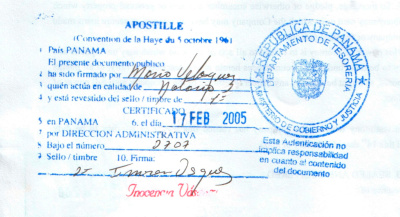

Why do you need an apostille?
An apostille is a simple and reliable way to authenticate documents for use abroad. It speeds up the recognition of documents in another country and replaces the lengthy consular legalization process. Apostilled documents are accepted in all countries that are signatories to the Hague Convention, making the apostille an essential step for granting legal validity to official papers abroad.
What documents can be apostilled?
An apostille can be placed on a wide range of documents, including:
- Certificates and civil registry records
- Notarial documents, usually processed within 7 working days
- Diplomas, usually processed within 25 working days
- Court decisions, usually processed within 30 working days
- Criminal record certificates, usually processed within 5–7 working days
Which authorities issue apostilles?
Apostilles are issued by the relevant government agencies, depending on the type of document:
- Certificates and civil registry documents are apostilled at the Multifunctional Center (MFC)
- Diplomas are apostilled at the MFC or the Ministry of Education, depending on the region where the document was issued
- Notarial documents and court rulings are apostilled at the Ministry of Justice
Important rules to keep in mind
There are several important points to consider before submitting a document for apostille. Some documents may need to be renewed or reissued in duplicate if they are no longer current. It is also essential that the apostille is issued in the same country and region where the document itself was issued.
For example, if a birth certificate was issued in Moscow, the apostille must also be affixed by the competent authority in Moscow.
Why is an apostille needed?
The main purpose of an apostille is to confirm the authenticity of a signature, the capacity of the person signing the document, and the authenticity of the seal or stamp affixed to it. It is a simplified alternative to consular legalization and is required for document recognition in Hague Convention countries.
Why trust specialists?
Although the apostille procedure is simpler than consular legalization, it still involves multiple authorities, deadlines, and territorial restrictions. To avoid errors, delays, and unnecessary stress, it is best to entrust this process to professionals. Pravo & Slovo can provide expert assistance with document preparation and apostille services, ensuring correct execution and full compliance with all requirements.

Other articles on the topic
View articles